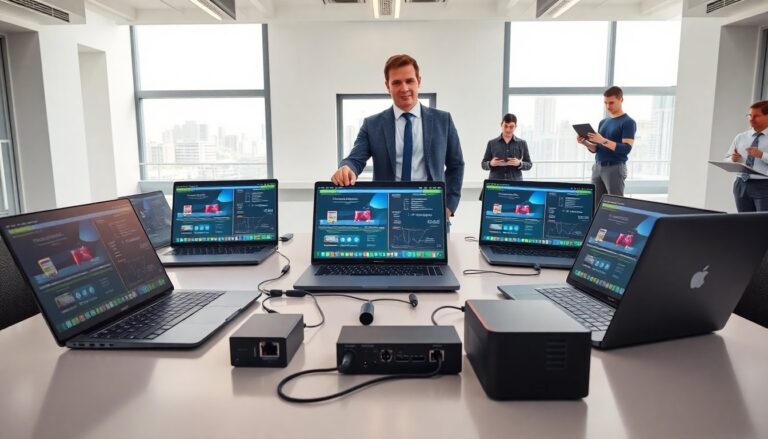

student needing laptop research thelaptopadviser helps narrow choices quickly. The guide lists core features and clear budgets. It shows what students need for class, projects, and study. The article stays practical and direct. It helps readers pick a reliable laptop that fits class software and money limits.
Key Takeaways
- A student needing laptop research thelaptopadviser emphasizes identifying tasks, budget, and mobility needs before choosing a laptop.
- Select hardware that fits your major: humanities require basic specs, engineering needs powerful CPUs and GPUs, and media students should prioritize color-accurate displays and ample RAM.
- Choose SSD storage and at least 8 GB RAM for smooth multitasking, with increased specs for programming or heavy media work.
- Consider durability, battery life, and portability for frequent commuters or dorm residents, opting for metal bodies and quiet fans.
- Utilize student discounts, check return policies, test key features like keyboard and battery performance, and secure warranties before purchase.
- Balance your needs, features, and budget carefully to select a reliable laptop that lasts through your studies.
Identify Your Needs: Who You Are, What You’ll Do, And How Much To Spend
Students should list tasks first. A student needing laptop research thelaptopadviser suggests they write down their apps, hours, and mobility needs. He, she, or they should note whether they use web apps, office suites, coding IDEs, or video editing tools. They should mark screen time per day and whether they travel with the device. Students should set a firm budget range. A student needing laptop research thelaptopadviser recommends entry-level budgets for basic tasks, midrange for programming and light editing, and higher budgets for heavy media work. They should decide if they want a touchscreen, two-in-one hinge, or a classic clamshell. They should check campus software requirements and compatibility. A student needing laptop research thelaptopadviser notes that school kiosks and campus printers may require specific ports or adapters. They should plan for at least four years of use. A student needing laptop research thelaptopadviser advises reserving funds for a case and a warranty extension if the device will see heavy travel.
Key Hardware And Features Explained (Processor, RAM, Storage, Display, Battery)
Buy parts that match tasks. A student needing laptop research thelaptopadviser spells out the key parts. The processor governs speed for compiling code and editing video. The RAM controls multitasking and browser tab loads. Storage defines capacity and app launch speed. The display affects long study sessions and color work. The battery sets real-world run time.
The guide lists clear targets next. For general use, choose a modern quad-core CPU and 8 GB of RAM. For coding and light media, choose a six-core CPU and 16 GB of RAM. For heavy video tasks, choose an eight-core CPU and 32 GB of RAM. Prefer SSD storage over HDD for fast boot and app loads. Aim for 256 GB minimum SSD for basic students and 512 GB or larger for media projects. Pick a display at 1080p for clear text. Choose an IPS or OLED panel for color accuracy. Seek at least 7 hours of battery life in mixed use. Check real-world tests for battery numbers rather than quoted spec hours. A student needing laptop research thelaptopadviser tells readers to prefer USB-C power if they carry chargers for phones or tablets.
Minimum Recommendations By Major And Use Case
Humanities and social science students can select efficient, low-cost machines. A student needing laptop research thelaptopadviser recommends a quad-core CPU, 8 GB RAM, and 256 GB SSD. Business students need spreadsheet and presentation speed. A student needing laptop research thelaptopadviser recommends a six-core CPU, 16 GB RAM, and 512 GB SSD if they run data tools.
Engineering and computer science students need compute headroom. A student needing laptop research thelaptopadviser recommends a six- to eight-core CPU, 16 GB RAM minimum, and 512 GB SSD. They should prefer discrete GPU for machine learning labs and CAD. Design and media students need strong GPUs and color-accurate screens. A student needing laptop research thelaptopadviser suggests an eight-core CPU, 32 GB RAM, 1 TB SSD, and an OLED or high-end IPS display. Video editors should add external storage for raw files.
Frequent commuters should favor thin light models with long battery life. A student needing laptop research thelaptopadviser suggests magnesium or aluminum bodies for durability. Dorm users who share space should pick quieter fans and readable displays at low brightness. Budget shoppers should look for last-year flagship processors on sale. A student needing laptop research thelaptopadviser reminds buyers to check keyboard feel and trackpad quality in store when possible.
Buying Tips, Warranty, Student Discounts, And A Final Pre-Purchase Checklist
Buy from retailers with clear return windows. A student needing laptop research thelaptopadviser urges buyers to compare stores and manufacturer deals. They should look for student discounts from manufacturers and education stores. They should register the device and consider extended warranty for drops and spills. They should inspect port selection for HDMI, USB-C, and SD cards. They should buy a docking option if they plan a desktop setup.
Test key features before final purchase. A student needing laptop research thelaptopadviser tells buyers to open multiple tabs and run a basic app to check thermals and fan noise. They should type a paragraph to test keyboard comfort. They should inspect screen for color shift and viewing angles. They should run battery tests with typical apps to see real runtime.
Complete a short checklist before checkout. A student needing laptop research thelaptopadviser lists power adapter, recovery media instructions, warranty terms, receipt storage, and accessories needed. They should confirm return policy and shipping times before buying. They should buy a protective case and a surge protector for dorm power. They should install updates and set up backups on first boot. A student needing laptop research thelaptopadviser closes by reminding buyers to balance needs, features, and price when they pick their next student laptop.