

Remember when turning a script into a video meant hiring a production crew, booking a studio, and burning through a budget that most small creators simply don’t have? Those days are fading fast. Text-to-video AI has quietly become one of the most transformative technologies in the content creation world, and in 2025, it’s more accessible, more capable, and more practical than ever before.
Whether you’re a solo creator, a startup marketer, or a seasoned filmmaker looking to prototype ideas faster, this technology deserves your full attention.
What Is Text-to-Video AI, and Why Does It Matter?
Text-to-video AI is exactly what it sounds like — you write a prompt or paste in a script, and the AI generates a video clip based on your description. The model interprets your words and translates them into visual scenes, motion, lighting, camera angles, and mood, all without you touching a camera or an editing timeline.
Video is the dominant content format across every major platform right now. YouTube, TikTok, Instagram Reels, LinkedIn — they all prioritize video, and they all reward creators who can produce it consistently. The bottleneck has never been ideas. It’s always been production. AI removes that bottleneck in a way that nothing else has managed to do before.
How the Process Actually Works
The workflow is simpler than most people expect. You start with your script or concept — even a rough one works. Then you break it down into scenes and write a prompt for each one, describing what you want to see visually. Something like “a young woman walking through a rainy Tokyo street at night, neon reflections on wet pavement, cinematic slow motion” gives the AI enough to work with.
AI-powered creative tools are also making visual customisation easier, allowing creators to experiment with details such as facial appearance, lighting, and colour adjustments. For example, an AI-based brown eye filter can help users modify eye colour quickly when creating or refining digital visuals for different creative projects.
From there, the model generates your clip — usually within a minute or two depending on the platform. You review it, adjust your prompt if needed, regenerate, and repeat until you have the shots you want. Then you stitch them together in a basic editing tool, add voiceover or music, and you’re done.
What used to take days now takes hours. What used to take hours can now take minutes.
What Today’s Best Tools Can Do
The quality gap between AI-generated video and traditionally produced content has narrowed dramatically. Modern text-to-video models handle complex scene composition, realistic character movement, atmospheric lighting, and even subtle details like fabric physics and environmental interaction.
Leading platforms like Runway, Kling AI, Pika, Hailuo, and Seedance 2.0 are all pushing the boundaries of what’s generatively possible. Each has its own strengths — some excel at cinematic realism, others at stylized animation or rapid generation speed.
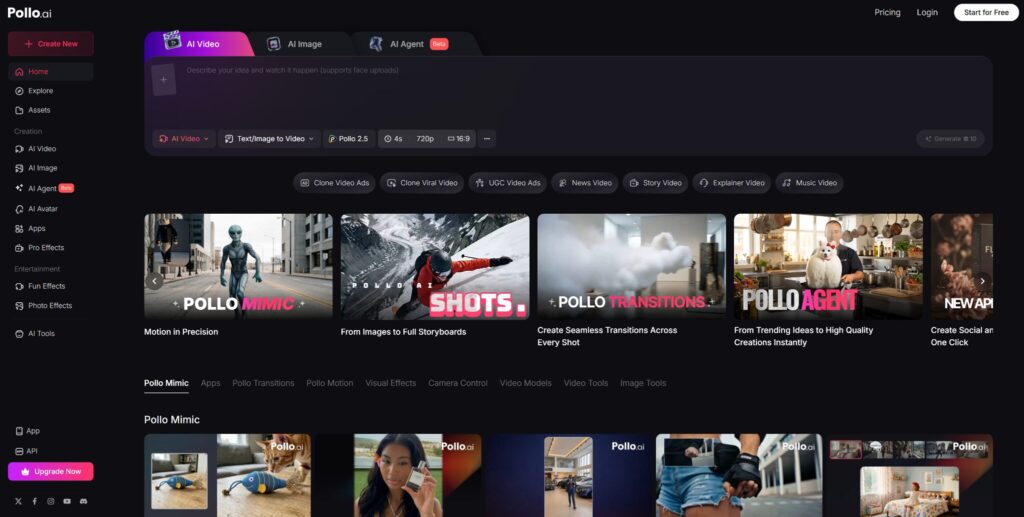
If you want a single platform that gives you access to those leading text to video models without managing separate accounts, Pollo AI is worth bookmarking. It brings together some of the best AI video generation tools in a video creator app, making it easy to compare outputs and find the right model for each specific project — all without the friction of juggling different subscriptions.
Real Use Cases That Are Already Happening
The adoption of text to video AI isn’t theoretical — it’s already reshaping how people work across industries.
Marketing teams are using it to produce ad concept videos and campaign mockups in hours rather than weeks, getting stakeholder buy-in before committing to full production budgets. Educators are turning dense written content into engaging explainer videos that hold student attention far better than static slides. E-commerce brands are animating product visuals and creating lifestyle content without photoshoots. Independent filmmakers are using AI-generated footage to pre-visualize scenes before shooting, saving time and money on set.
Even corporate communications teams are getting in on it, turning internal reports and announcements into short video summaries that employees actually watch.
Tips for Writing Prompts That Actually Work
The quality of your output depends heavily on the quality of your input. A few principles that consistently produce better results:
Be specific about camera movement. “Slow push in on a close-up” gives the model much clearer direction than “zoom in.” Describe the lighting, not just the subject — “warm afternoon light filtering through curtains” produces a very different result than “indoor scene.” Include mood and atmosphere in your prompt, because AI models respond well to emotional direction. And always iterate — treat your first generation as a draft, not a final product.
The more intentional you are with your prompts, the less time you spend regenerating and the more time you spend actually creating.
The Limitations Worth Knowing About
AI is powerful, but it’s not magic. Most platforms cap clip length at somewhere between five and ten seconds per generation, which means longer videos require assembling multiple clips. Fine-grained control over specific elements — moving one object without affecting the rest of the scene, for example — is still limited on most platforms. And highly complex multi-character interactions can occasionally produce inconsistencies that require additional iterations to resolve.
These are real constraints, but they’re shrinking with every model update. The trajectory is clear, and the pace of improvement has been remarkable.
Is Text-to-Video AI Right for You?
If you produce any kind of content for digital platforms, the honest answer is yes. The entry barrier is low, the learning curve is gentle, and the potential time savings are significant. You don’t need to replace your entire production workflow overnight — even using AI video generation for one part of your process, like B-roll creation or concept visualization, can make a meaningful difference in how quickly and cost-effectively you work.
The creators and teams who are building familiarity with these tools now are going to have a serious advantage as the technology continues to mature. AI isn’t a passing trend. It’s a fundamental shift in how visual content gets made — and it’s already here.
Your script is ready. The video is just minutes away.