Pro gaming thelaptopadviser gives clear reviews and test results for serious players. The site tests hardware, measures frame rates, checks thermals, and rates battery life. It lists trade-offs and price points. The guide helps players match specs to goals. Readers find concise recommendations, test data, and buying tips they can use immediately.
Key Takeaways
- Pro gaming thelaptopadviser provides detailed hardware tests and concise recommendations to help serious players choose the best gaming laptops.
- Dedicated gaming laptops offer higher sustained frame rates, better cooling, and lower input lag, making them ideal for pro players and tournament settings.
- TheLaptopAdviser uses repeatable, objective tests measuring frame rates, thermals, display quality, and battery life to score and compare gaming laptops.
- Top-tier gaming laptops deliver consistent high FPS and reliable performance with advanced GPUs and displays, suited for streaming and competitive play.
- Mid-range gaming laptops offer strong price-to-performance ratios, running esports titles smoothly while balancing cost and features for budget-conscious pros.
- Portable gaming laptops recommended by TheLaptopAdviser balance power and mobility with efficient cooling and high-refresh displays, ideal for professionals on the move.
Why Pro Gamers Should Choose A Dedicated Gaming Laptop
Pro gaming thelaptopadviser explains why pros choose a dedicated gaming laptop. A dedicated laptop delivers higher sustained frame rates than most thin-and-light laptops. It provides powerful GPUs, higher-refresh displays, and tuned cooling. It reduces input lag with native high-refresh panels and fast I/O. It also offers consistent performance in tournaments and live streams. Pro players get stable performance under load and easier setup for multi-monitor play. TheLaptopAdviser compares real match scenarios and shows how a dedicated laptop cuts setup time and keeps frame drops low.
How TheLaptopAdviser Tests, Scores, And Compares Pro Gaming Laptops
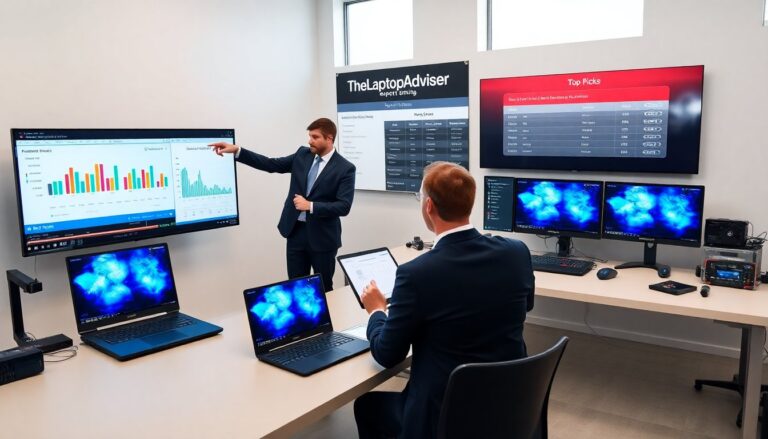
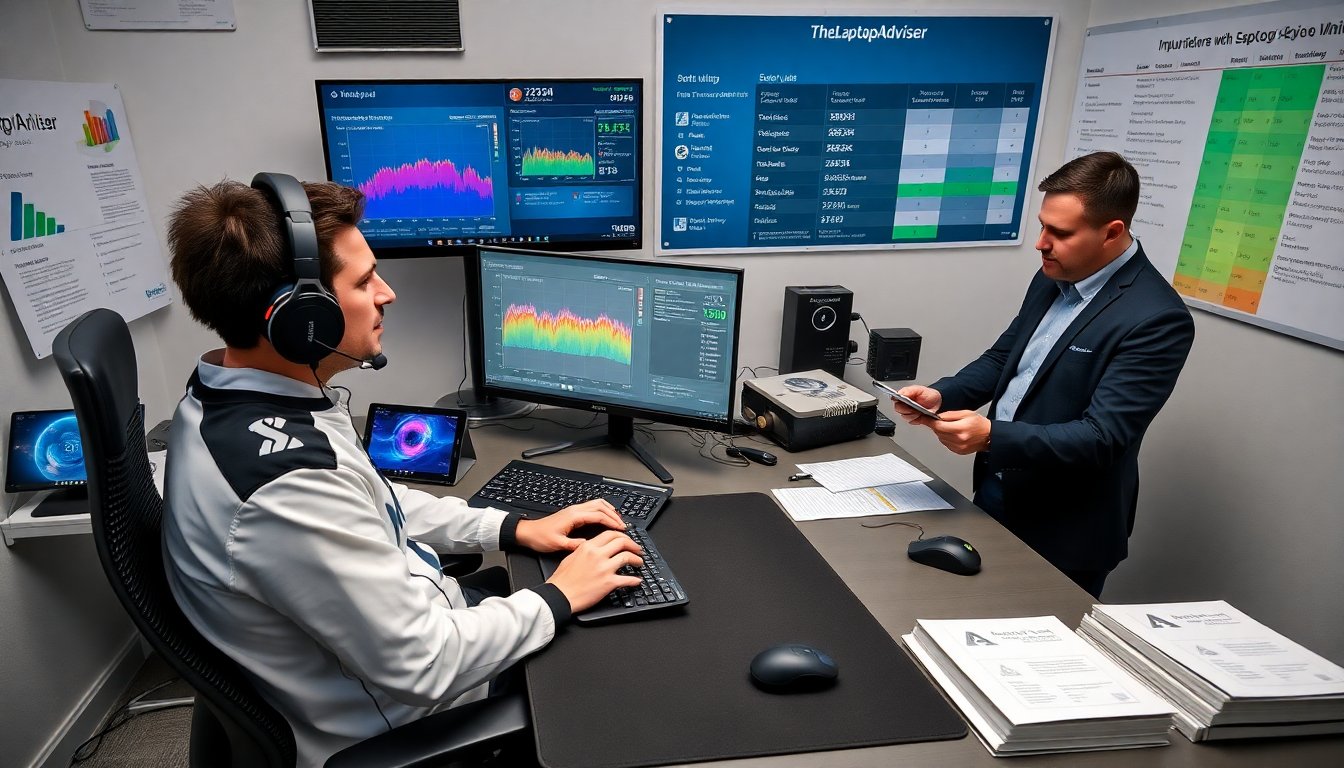
TheLaptopAdviser runs repeatable tests and records objective numbers. The team measures frame rates in popular esports titles and in AAA benchmarks. They log thermals, clock speeds, and throttling behavior. They test display latency, color accuracy, and refresh rates. They run battery tests under load and at desktop tasks. They use a consistent scoring system that weights performance, thermals, display, battery, and value. They compare results across generations and price tiers. TheLaptopAdviser also inspects build quality and port layout and notes repairability and warranty details.
Best Overall: High-End Performance And Reliability
TheLaptopAdviser picks a flagship model that delivers top FPS and steady thermals. This laptop pairs a high-end GPU with a strong mobile CPU and a 240Hz or faster panel. It runs esports titles above 240 FPS with competitive settings and keeps clocks stable during long sessions. Build quality is solid and the keyboard feels responsive. TheLaptopAdviser notes that this model costs more but it gives reliable tournament-grade performance and long warranty options. Pros who stream and play at high settings will benefit most from this pick.
Best Value: Competitive Specs Without Breaking The Bank
TheLaptopAdviser selects a mid-range model that hits a strong price-to-performance mark. This laptop uses a recent GPU and a six- to eight-core CPU. It runs popular esports titles at 144–240 FPS on medium to high settings. It keeps thermals acceptable and offers good port selection. The team recommends this model for players who want pro-level results on a budget. TheLaptopAdviser highlights deals and seasonal price drops as ways to save more without sacrificing core performance.
Best Portable Pro Gaming Laptop: Power On The Go
TheLaptopAdviser names a thin-but-powerful laptop that balances weight and power. This pick uses efficient GPU tuning and advanced cooling to preserve battery and reduce fan noise. It fits in carry-on bags and still outputs high FPS in competitive titles. The display offers at least 165Hz and fast G-Sync or FreeSync support. TheLaptopAdviser notes the trade-off: top-end sustained FPS may be lower than a heavier desktop-replacement machine. Still, for pros who travel, this model delivers the best mix of mobility and playability.
Practical Buying Checklist: What To Look For Before You Buy
TheLaptopAdviser advises buyers to check core specs and real tests. First, verify GPU model and real-world FPS for your game. Second, check CPU sustained clocks under load. Third, confirm display refresh rate, response time, and panel type. Fourth, review cooling design and measured temperatures. Fifth, test keyboard layout, macro support, and port selection. Sixth, compare weight and battery life if mobility matters. Seventh, read warranty terms and service options. TheLaptopAdviser recommends matching the laptop to the player’s primary game and streaming needs before purchase.