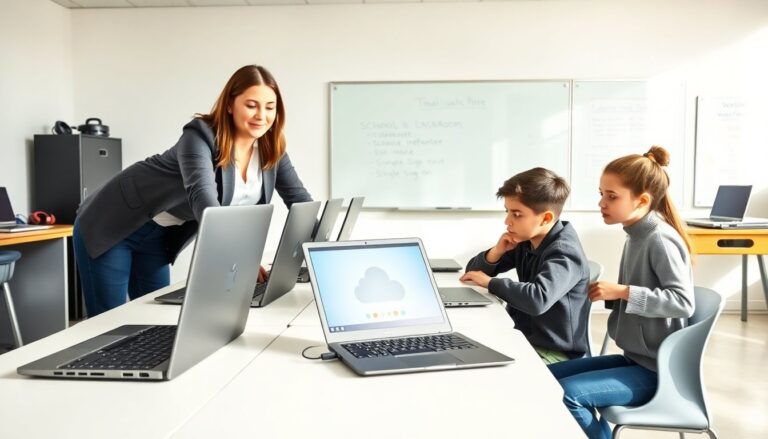

Education laptops thelaptopadviser helps readers find the right student laptop fast. The guide lists top models, clear buying rules, and platform trade-offs. It targets parents, teachers, and students who want reliable, affordable choices. The article focuses on specs, platform fit, durability, and long-term value. It gives direct advice without jargon and helps readers pick a device that fits school needs and budgets.
Key Takeaways
- Education laptops thelaptopadviser specializes in helping parents, teachers, and students quickly find reliable and affordable laptops tailored to school needs.
- Choosing the right education laptop involves assessing primary tasks, budget, platform compatibility, and portability to ensure optimal daily use and long-term value.
- Chromebooks, Windows laptops, and Macs each offer distinct benefits for education, with platform choice best aligned to grade level and specific coursework requirements.
- Key specs such as CPU, RAM, SSD storage, and battery life should be prioritized to match the intensity of schoolwork, aiming for at least 8 GB of RAM and 8+ hours of battery life for most students.
- Durability and warranty options greatly impact total cost of ownership, so selecting models with sturdy materials, easy repairability, and good service plans maximizes investment value.
- Accessories like protective cases, external mice, and cloud backup, plus school-licensed software and extended warranties, enhance the usability and protection of education laptops.
Top Education Laptop Picks For 2026
Education laptops thelaptopadviser names several standout models for 2026. The list includes a compact Chromebook for primary students, a Windows ultrabook for high school, and a thin MacBook Air for creative coursework. Each model balances performance, battery life, and price. The Chromebook model offers long battery life and cloud integration. The Windows ultrabook provides enough power for coding and light video projects. The MacBook Air supports art and media classes that use macOS apps. Schools that need fleet management may favor Chromebooks. Parents who want versatility may favor Windows or Mac. Each pick scores on repairability and warranty options. The guide highlights models that scored well in classroom tests and teacher feedback. It also flags models with strong keyboards and webcams for remote lessons. Readers can match a model to grade level and subject needs. The list updates from reviews and field reports.
How To Choose The Right Education Laptop
Education laptops thelaptopadviser recommends a decision process with four steps. First, define primary tasks like web research, writing, spreadsheets, or media editing. Second, set a budget range that includes accessories and warranty. Third, pick a platform that matches software needs. Fourth, check size, weight, and battery life for daily carry. The guide asks readers to prioritize user comfort and repair options. It advises testing keyboards and touchpads before buying. It suggests verifying school software compatibility. It also recommends tracking total cost of ownership, not just sticker price. The process helps schools and families make consistent, practical choices.
Key Specs To Prioritize For School Use (CPU, RAM, Storage, Battery)
Education laptops thelaptopadviser lists clear spec targets. For basic tasks, choose a dual-core CPU and 4–8 GB of RAM. For heavier tasks, choose a quad-core CPU and 8–16 GB of RAM. For storage, favor SSDs from 128 GB for Chromebooks to 512 GB for multimedia work. For battery life, aim for 8+ hours to cover a school day. The guide advises at least 8 GB of RAM for middle and high school, especially for multitasking. It recommends SSDs for speed and durability. It warns that low-capacity storage forces frequent cloud use. It notes that CPU class affects battery and heat. It tells readers to balance CPU, RAM, and battery for their daily workflows.
Chromebooks Vs Windows Laptops Vs Macs For Education
Education laptops thelaptopadviser compares major platforms on cost, management, and app support. Chromebooks cost less and they simplify fleet management for IT staff. Windows laptops run legacy apps and varied software. Macs offer stable hardware and strong media apps for creative classes. Chromebooks work well with cloud services and web apps. Windows machines work well with specialized school software and gaming labs. Macs work well for visual design and music production classes. The guide points out that each platform has trade-offs in software availability, repair options, and resale value. It suggests aligning platform choice with the curriculum and IT capacity.
When To Choose Each Platform Based On Grade Level And Coursework
Education laptops thelaptopadviser gives grade-based advice. For elementary grades, choose Chromebooks for simplicity and low cost. For middle school, choose Windows laptops for coding and varied apps. For high school, choose Windows or Mac depending on advanced coursework. For art and media courses, choose Macs for app availability and color accuracy. For STEM and robotics, choose Windows for device compatibility and more ports. For general classroom use, Chromebooks meet most needs with fewer support demands. The guide tells decision makers to match platform to courses rather than brand preference.
Budget, Durability, And Long-Term Value: Getting The Best Return For Schools And Parents
Education laptops thelaptopadviser evaluates cost per year and repair time. The guide measures initial price, expected lifespan, and maintenance costs. It recommends metal or reinforced plastic chassis for longer life. It advises choosing models with easy access to replace batteries and storage. It suggests signing service contracts for school fleets. It promotes buying slightly higher-spec models to delay replacement cycles. It urges comparing warranty terms and on-site service options. It also recommends checking student damage policies and accidental coverage. The guide favors purchases that lower total cost over three to five years.
Accessories, Software, And Warranty Considerations For Students
Education laptops thelaptopadviser lists key extras that matter. It recommends a protective case and a reliable charger. It suggests investing in a quality external mouse and headphones for focus. It advises choosing cloud backup or an external drive for file safety. It recommends school-licensed software for productivity and learning tools. It encourages buying extended warranties or accidental damage protection for student use. It advises checking if the vendor offers educational discounts and volume licensing. It recommends periodic inventory audits for school fleets to track repairs and replacements. The guide ends with a reminder to document serial numbers and warranty details for easier claims.